Who I Wrote It For
- Product managers who want a structured understanding of Claude Code
- People building AI, agent, or developer-tool products
- Teams evaluating Claude Code for real workflows
- Readers extracting reusable product lessons from source code
I wrote this as a practical English edition for readers who want to study Claude Code from the inside out, based on the cc2.1.88 source snapshot and Anthropic's public materials.
I did not want to write another surface-level "here are the features" guide. I wanted something product managers, technical leads, and AI builders could actually read to understand why Claude Code feels so solid in practice.
So this book became my way of combining product analysis, runtime reading notes, and a collection of design lessons worth borrowing for agent products.
You can read it straight through, or jump in by product framing, runtime design, governance, or adoption.
Place Claude Code at the right level: not a command-line chat box, but an agent harness for software work.
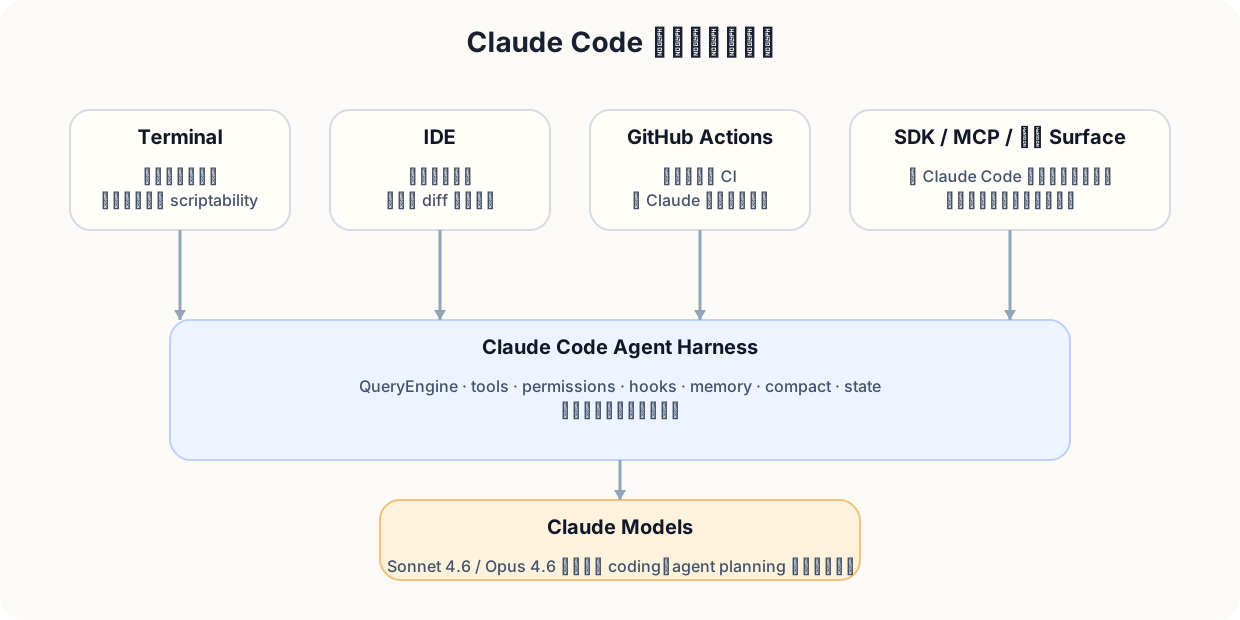
Chapter 2Understand how Claude Code fits into Anthropic's broader product system across terminal, IDE, Actions, SDK, and MCP.
Chapter 3Reframe the technical system with product language that clarifies what really matters.
Chapter 4Read Claude Code from the perspective of actual user journeys rather than isolated source files.
Chapter 5Break down the experience advantage into product and engineering mechanisms that can be reused elsewhere.
Chapter 6Establish evidence boundaries before making claims about the codebase.
Chapter 7See why the startup layer is already more like an execution router than a normal CLI entrypoint.
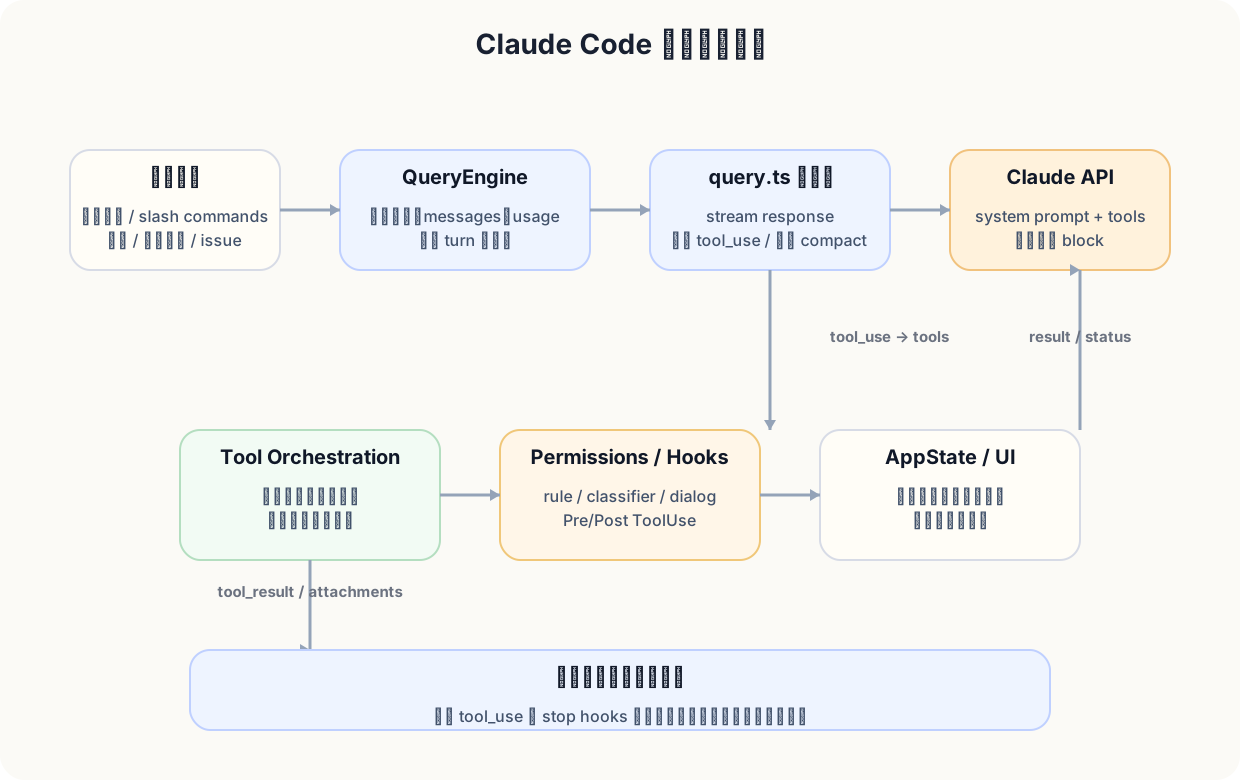
Chapter 8The heart of the product: the loop that keeps work moving across reasoning, tools, and state.
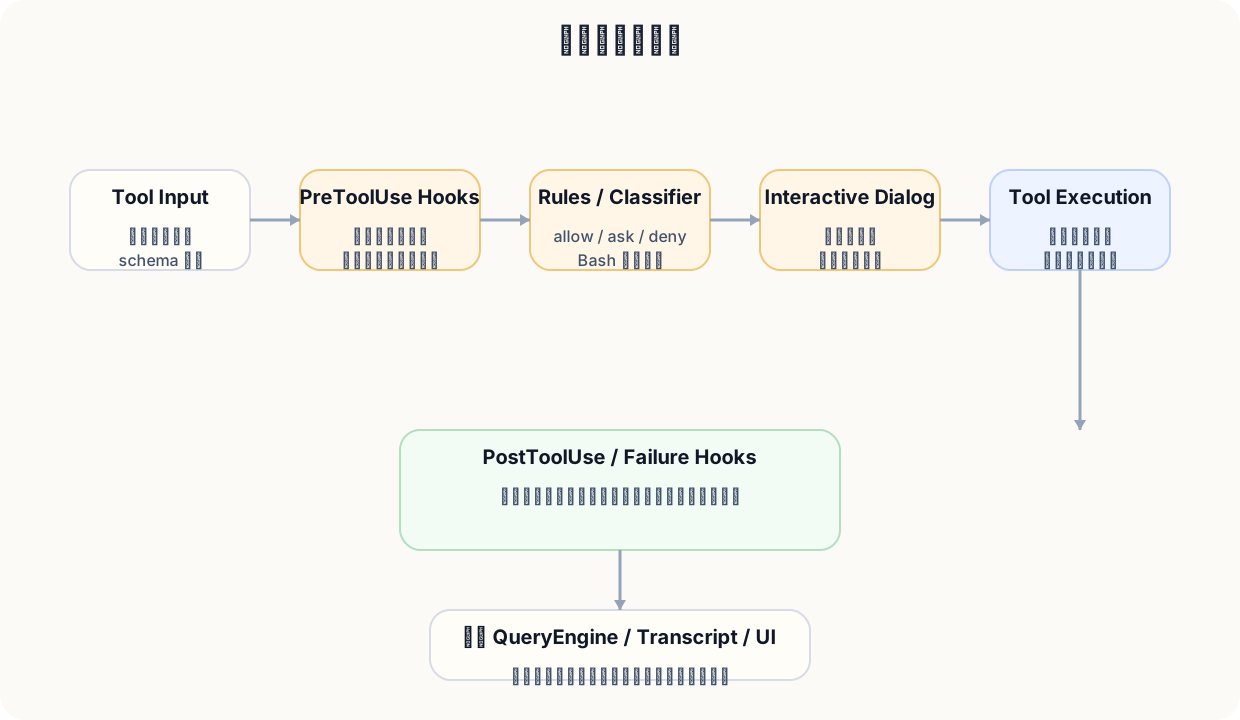
Chapter 9Understand the abstractions, safety constraints, and orchestration rules behind Claude Code's execution power.
Chapter 10Learn why Claude Code can automate aggressively without becoming uncontrollable.
Chapter 11Claude Code's prompting model is not one string, but a layered runtime structure.
Chapter 12See how long-running tasks survive through dynamic context boundaries, memory tiers, and compaction.
Chapter 13Understand why Claude Code behaves like an application shell rather than a thin wrapper around commands.
Chapter 14Trace how the platform surface is segmented into different extensibility layers instead of one generic plugin story.
Chapter 15Study both the meaningful advantages and the boundaries that should not be romanticized.
Chapter 16Turn the full analysis into adoption advice, product-method lessons, and a practical learning path.
I use diagrams throughout the book to make the runtime and product structure easier to hold in your head.